

What Is kVA in Power? Understanding kVA in Diesel Generators
-
By anwar
-
June 9, 2026
- 0 Comment
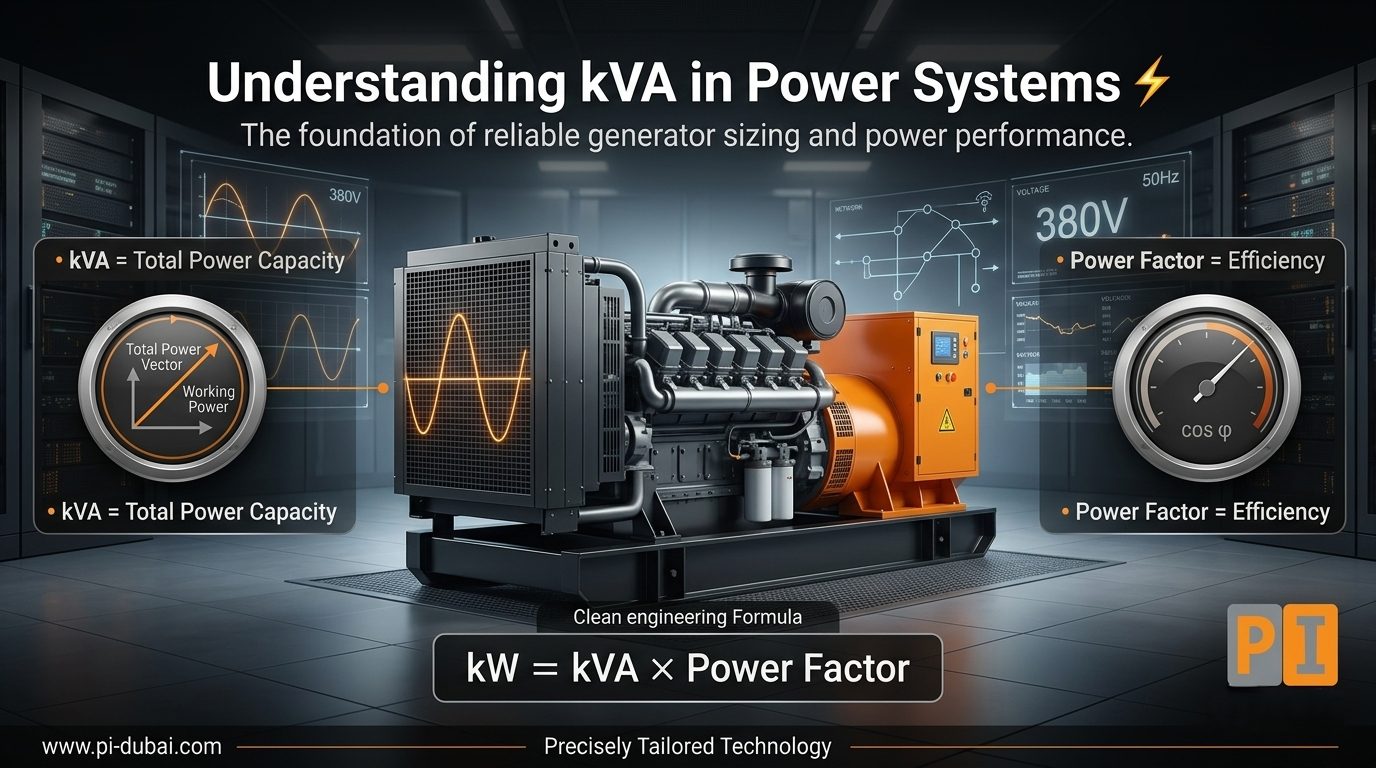
When selecting a diesel generator for industrial or commercial applications, one of the most important technical terms you will encounter is kVA. Whether you need backup power for a data center, hospital, factory, construction site, or commercial building, understanding kVA is essential for choosing the correct generator size and ensuring reliable power performance.
At Precision Industries, we regularly receive questions such as:
- What does kVA mean?
• What is the difference between kVA and kW?
• Why are diesel generators rated in kVA?
• How do I calculate the right generator size?
In this article, we explain kVA in a simple and practical way to help engineers, consultants, facility managers, and project owners make informed power decisions.
What Does kVA Mean?
kVA stands for Kilovolt-Ampere.
It is the unit used to measure apparent power in AC electrical systems. In diesel generators, transformers, and UPS systems, the kVA rating represents the total amount of power available to supply electrical equipment.
In simple terms, kVA represents the total electrical capacity required by a load, including both:
- kW = Actual usable power
• kVAR = Reactive power
Because electrical systems are not 100% efficient, not all supplied power is converted into useful work. In AC circuits, the total power demand includes both real power, which performs useful work, and reactive power, which supports magnetic and electric fields in equipment. That is why diesel generators are globally rated in kVA as it represents the generator’s total electrical capacity, rather than only the usable output measured in kW.
Why Is kVA Important in Diesel Generators?
The kVA rating determines the generator’s ability to support electrical loads safely and efficiently.
Proper generator sizing is critical because it affects:
- Generator capacity
• Fuel efficiency
• Voltage stability
• Equipment protection
• Operational reliability
• Future expansion capability
Choosing the wrong generator size can lead to serious operational problems such as:
- Generator overloading
• Frequent shutdowns
• Voltage fluctuations
• Higher fuel consumption
• Reduced generator lifespan
• Downtime in critical operations
For industries that depend on continuous power, accurate kVA sizing is essential.
Difference Between kVA and kW
The relationship between kVA and kW depends on the Power Factor (PF), which is an expression of energy efficiency.
The standard engineering formula is:
kW = kVA × Power Factor
In most industrial diesel generator applications, the standard common assumption power factor is typically 0.8, which is not a fixed electrical rule. It is a standard generator rating reference that represents typical industrial loads with motors and other inductive equipment. The actual power factor depends on the connected load.
Example:
A 1000 kVA diesel generator provides:
kW = kVA × Power Factor
1000 kVA × 0.8 = 800 kW
This means the generator can deliver approximately 800 kW of usable power.
How to Choose the Right kVA Generator Size
Selecting the correct diesel generator depends on several technical factors.
- Total Electrical Load
Calculate the total connected equipment load, including:
- HVAC systems
• Pumps and motors
• Lighting systems
• Elevators
• Industrial machinery
• Data center infrastructure
- Starting Current
Some equipment requires higher startup power than normal operating power, especially:
- Electric motors
• Compressors
• Pumps
• Air conditioning systems
The generator must handle these temporary load spikes.
- Application Type
Generator sizing also depends on the application:
- Standby power generators
• Prime power generators
• Continuous operation systems
• Critical backup power solutions
- Future Expansion
A properly designed power system should allow room for future operational growth.
Common Diesel Generator kVA Ratings
Different industries require different generator capacities.
Typical diesel generator ratings include:
- 50 kVA generators
• 100 kVA generators
• 250 kVA generators
• 500 kVA generators
• 1000 kVA generators
• 1500 kVA generators
• 2500 kVA generators
Large facilities such as hyperscale data centres and industrial plants often use synchronized multiple-generator systems for redundancy and load sharing.
Why Accurate kVA Sizing Matters in the UAE & GCC
Industries across the UAE, GCC, Middle East, and Africa operate in demanding environmental conditions where power reliability is critical.
Sectors that heavily depend on correctly sized diesel generators include:
- Data centers
• Oil & gas facilities
• Manufacturing plants
• Hospitals
• Telecom infrastructure
• Commercial towers
• Construction projects
In critical applications, even a small power mismatch can lead to equipment damage, operational downtime, and financial losses.
Precision Industries Diesel Generator Solutions
At Precision Industries, we design and manufacture diesel generator solutions engineered for harsh environments and demanding industrial applications.
Our generator systems are available in a wide range of kVA ratings using globally recognized engines and premium alternators to deliver reliable standby and prime power solutions across the UAE, GCC, Middle East, and Africa.
Whether you need a backup generator for a commercial facility or a synchronized multi-generator power plant solution, accurate kVA sizing is the foundation of reliable power performance.
Frequently Asked Questions About kVA
Is kVA the same as kW?
No. kVA measures apparent power, while kW measures actual usable power.
Why are generators rated in kVA?
Generators are rated in kVA because they supply both active and reactive power to electrical systems.
What is the standard power factor for generators?
The 0.8 power factor is a common standard rating assumption for many three-phase diesel generators, especially industrial generator sets.
How do I calculate the generator size I need?
You must calculate the total connected load, starting currents, application type, and future expansion requirements.
What happens if a generator is undersized?
An undersized generator may overload, overheat, trip frequently, and cause unstable voltage output.
Final Thoughts
Understanding kVA is one of the most important steps when selecting a diesel generator.
The correct generator size helps improve:
- Operational reliability
• Fuel efficiency
• Equipment protection
• Business continuity
• Long-term return on investment
Before selecting any power solution, always consult experienced generator specialists to ensure accurate sizing based on your operational requirements.
Looking for reliable diesel generator solutions in the UAE?
Contact Precision Industries today and discover power systems engineered for performance, reliability, and critical operations.